Click Here
To Book Online
Chat with us
WhatsApp us
Call us
1800-212-2125

Commercial Pest Control Services for Businesses

Pest activity can affect hygiene, operations, stock, reputation and the integrity of your premises. Rentokil PCI provides commercial pest management services designed around the pest risks, operating conditions and requirements of your facility.

From food-handling environments and hospitality premises to offices, retail spaces, warehouses and industrial sites, our approach combines site assessment, targeted control measures and monitoring appropriate to the pest and the environment.

Why Choose Rentokil PCI for Commercial Pest Control?

Commercial pest management requires an approach aligned with the facility’s risk profile, activities and operating conditions. Rentokil PCI’s commercial services are designed to address pest concerns through appropriate control measures and site-specific recommendations.

Pest Management for Your Business Environments

Pest pressures vary across food-handling facilities, hospitality, retail, healthcare, offices and industrial premises. Effective service planning considers the facility’s layout, operational activities, hygiene requirements and pest risks, ensuring that management measures are relevant to the business environment.

A Structured, Site-Specific Pest Management Approach

Effective pest management evaluates pest identification and activity, potential entry routes, harbourage and environmental conditions that may sustain infestation. Assessment findings inform the selection of appropriate control measures, taking into account affected areas, site conditions and operational requirements.

Commercial Solutions for Different Pest Risks

Commercial pest programmes can address cockroaches, rodents, flying insects, termites, mosquitoes and birds, each presenting distinct biological and environmental challenges. The control strategy is selected according to pest species, activity patterns, infestation location, conducive conditions and the requirements of the facility.

Planning Around Site Operations

Commercial pest-control delivery may require coordination around operating hours, access restrictions, occupancy, stock, equipment and hygiene-sensitive areas. These factors inform treatment scheduling, access arrangements, site preparation and the agreed scope, helping the service team plan work in context with facility operations.

Monitoring and Reporting Where Included

Monitoring and service reporting can support the evaluation of pest activity, review of site observations and identification of conditions requiring corrective action. Depending on the agreed programme, records may inform follow-up planning and help the business understand pest trends, service findings and recommended actions.

We Harness Science

Rentokil PCI draws on global technical expertise to understand pest behaviour and develop effective pest management solutions. The Rentokil Global Technical Centre in the UK brings together specialists in entomology, microbiology, analytical chemistry, regulatory affairs, product formulation, electro-mechanical engineering, electronics and sensing technology.

This multidisciplinary research supports the development of pest-control methods and technologies, with a focus on pest prevention, treatment effectiveness, health, safety and environmental protection. Global technical resources also support local operations, helping apply relevant expertise to the pest challenges faced by customers.

Work to reinvent Rentokil happens every day. We are constantly moving forward.

Andy Ramson, CEO of Rentokil Initial plc

With new innovations constantly raising standards for pest control and protection combined with an increasing intolerance of pests and their associated diseases by a growing middle class, the need to innovate and embrace new technologies has never been greater.

As a result, finding smarter and more effective ways to control pests is a primary objective.

Science and Innovation in Pest Control


Regulatory Compliance and Industry Standards

Commercial pest management must account for applicable legislation, product requirements and standards relevant to each customer’s industry. Rentokil PCI’s regulatory expertise supports the review of requirements affecting pest-control products and treatments, including pesticides and insecticides.

The appropriate pest management measures depend on the facility, pest risks, applicable requirements and agreed service scope.

Food Safety Standards and Pest Management

Pest management is one component of a wider food-safety and hygiene programme. Food-related businesses may operate under audit frameworks and standards that include AIB International and BRC Global Standards. Pest management should be planned in context with the customer’s applicable requirements and facility procedures.

Partnership with BRC Global Standards

Rentokil Initial’s existing page states that a strategic partnership with BRC Global Standards was announced in 2017, with the aim of supporting best practice and helping food-industry customers manage risk.

Retain the existing partnership reference and link, subject to confirmation that the wording remains approved and current.

Working with the Global Food Safety Initiative (GFSI)

The existing page references Rentokil Initial’s relationship with the Global Food Safety Initiative (GFSI) in support of its focus on food safety.

Retain the existing GFSI link and approved description. Ensure the final wording accurately describes the nature and scope of the relationship.

CEPA Certification and EN 16636

The existing page refers to CEPA certification and EN 16636, describing compliance across European operations.

This reference should remain clearly scoped to the relevant European operations. Do not imply that the certification applies to all Indian commercial services, sites or treatments unless the current certification documentation confirms that.

Commercial Pest Management for Your Industry

Pest risks vary by industry, facility layout, hygiene requirements and day-to-day operations. Rentokil PCI can assess these factors to help determine a commercial pest management programme suited to your premises.

Food Processing & Manufacturing

Food production sites must manage pest risks around raw materials, processing areas, packaging, storage and waste. Pest management should be coordinated with hygiene controls, production activities and applicable food-safety requirements.

Food Industry Enquiry
Restaurants, Hotels & Hospitality

Commercial kitchens, food stores, dining areas, guest spaces and waste-handling zones can attract or harbour different pests. Service planning should consider food-handling practices, cleaning schedules, occupancy, pest access points and operating hours.

Hospitality Enquiry
Retail & Shopping Facilities

Sales floors, stockrooms, receiving bays, food outlets and shared service areas may have distinct pest pressures. Assessment should consider goods movement, storage conditions, waste management, building access and the areas requiring monitoring or control.

Retail Enquiry
Healthcare & Sensitive Facilities

Healthcare environments require careful planning around occupancy, hygiene protocols, restricted areas and sensitive equipment. Pest management should be coordinated with the facility’s procedures and responsible personnel.

Healthcare Enquiry
Offices & Corporate Premises

Workspaces, kitchens, washrooms, storage rooms and shared facilities may attract different pests. Management should consider housekeeping, occupant activity, building access and discreet service scheduling where required.

Commercial Enquiry
Warehousing & Distribution Centers

Stored goods, loading bays, receiving areas and building perimeters can create opportunities for pest entry or harbourage. Assessment should consider stock type, goods movement, structural access points and site activity.

Warehouse Enquiry
Building & Construction

Construction sites and buildings under development may face pest risks around materials, waste, temporary structures and openings in the building envelope. Management should be adapted to the project stage, site conditions, access routes and potential pest harbourage.

Construction Enquiry
Industrial Manufacturing Facilities

Production areas, machinery, utilities, processing zones, storage and extensive building perimeters can present complex pest-management challenges. Assessment should consider pest entry and harbourage, equipment access, environmental conditions and operational constraints.

Manufacturing Enquiry
Education: Schools & Institutions

Classrooms, cafeterias, kitchens, storage areas, campuses and outdoor spaces in schools, colleges and other educational facilities can present pest risks. Service planning should consider occupancy patterns, food areas, hygiene routines, access restrictions and the institution’s schedule.

Institutional Enquiry

Need pest management for your facility?

Tell us about your industry, premises and pest concerns so our team can discuss the appropriate service options.

Book Your Service

* Required field

Form data fieldset
Form selection
reason
Form selection
Form selection
Form selection

Pest Control Services for Commercial Premises

Explore commercial pest management options for the pest activity affecting your facility. The appropriate approach depends on pest identification, site conditions and operational requirements.

Cockroach Control

Cockroaches harbour in kitchens, drains and equipment spaces. Commercial management involves assessing activity and harbourage, then selecting suitable treatment and monitoring measures.

Explore Roach Control
Termite Control

Termites can damage structural materials while remaining concealed. Management considers evidence of activity, building conditions and potential access points to determine a suitable treatment approach.

Explore Termite Control
Bed Bug Treatment

Bed bugs can harbour in mattresses, bed frames and upholstered furniture. Management focuses on inspecting affected areas, locating harbourage and planning correct treatment and follow-up.

Explore Bed Bug Control
Rodent Control

Rodents can enter through structural gaps and service openings. Management involves assessing activity and entry routes, applying suitable control measures and addressing conditions that support their presence.

Explore Rodent Control
Mosquito Control

Mosquitoes may breed in standing water and other suitable sites. Management involves identifying potential breeding sources and selecting control measures suited to site conditions.

Explore Mosquito Control
Bird Control

Birds may roost or nest on rooftops, ledges, signage and other building structures. Management involves assessing bird activity, species and site conditions to determine suitable deterrent or exclusion measures.

Explore Bird Control
Fly & Fying-Insect Control

Flies can pose hygiene concerns around food, waste and moisture. Management considers insect activity, breeding sources and entry routes to guide monitoring and control.

Explore Fly Control
Vector Control

Disease-associated vectors can pose site-specific risks. Management considers the species, breeding sites and environmental conditions to guide preventive measures.

Explore Vector Control
Other Insects

For other crawling or flying insects, management begins with pest identification and assessment of activity, harbourage and conditions contributing to their presence.

Explore Other Insects

Featured Commercial Pest Management Solutions

Explore selected solutions for commercial pest risks. The appropriate approach depends on pest activity, site conditions and operational requirements. The following solutions can be presented as featured options where they are available within RPCI’s current Indian service portfolio

Commercial cockroach control must suit active workplaces, including food-handling areas, equipment and operating schedules. GSS 4D Pro uses a structured approach, with treatments tailored to the premises and identified conditions.

Lumnia LED units support commercial flying-insect management. Their suitability and placement depend on insect activity, facility layout and operating conditions, complementing measures that address insect entry and breeding sources.

Bird activity around commercial buildings can cause fouling and disruption near entrances, loading areas and structures. Bird management uses suitable deterrent or exclusion solutions to reduce roosting and access.

Termite activity can threaten building materials, including areas where damage may go unnoticed. Commercial termite management considers pre- and post-construction risks, with an approach suited to the building and termite activity.

Mosquito control is most effective when the conditions supporting their lifecycle are considered alongside adult mosquito activity. Commercial programmes can include attention to breeding habitats and environmental sources, complemented by appropriate control measures.

An Integrated Pest Management Approach

Effective commercial pest management goes beyond responding to visible pest activity. Rentokil PCI’s ERDM framework considers how pests enter, what supports their presence, how activity can be controlled and how results are monitored.
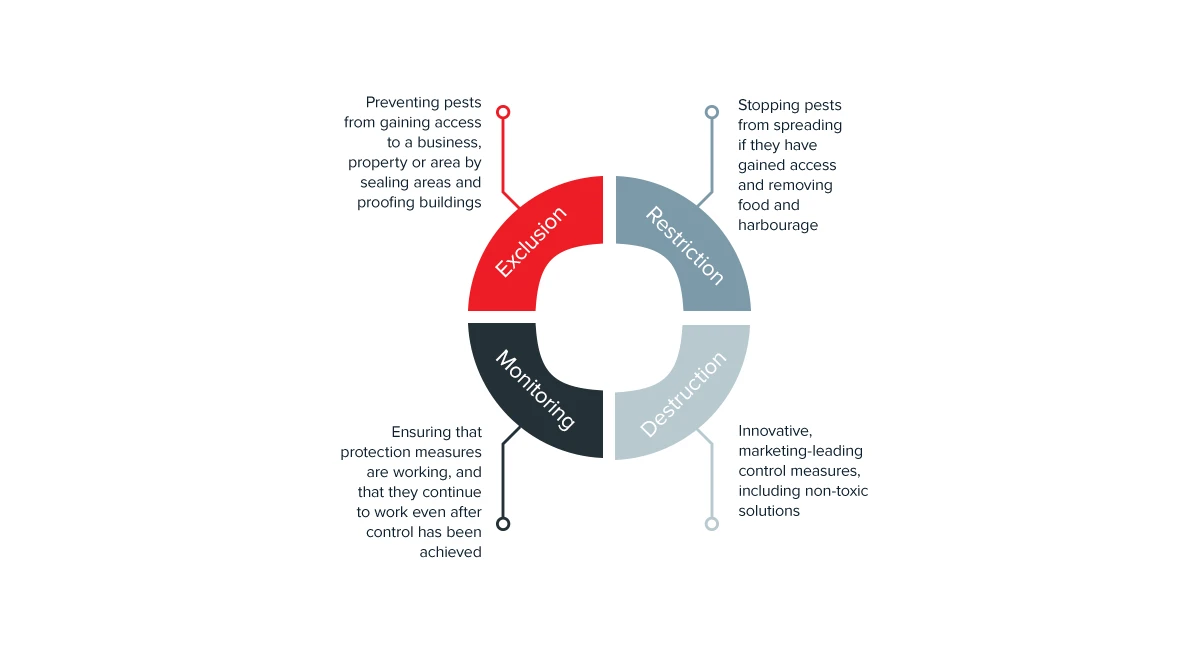
Exclusion

Identify potential pest entry routes, such as gaps, openings and damaged seals. Where practicable, address these access points to help prevent pest ingress.

Restriction

Review conditions that may support pest activity, including access to food, water, shelter and breeding or harbourage sites. Recommend practical corrective actions suited to the facility and pest involved.

Destruction

Apply control measures selected for the pest, its activity and site conditions. Treatments are carried out in line with the agreed service scope and applicable requirements.

Monitoring

Use suitable inspections and monitoring methods to track pest activity and identify where further action may be needed. Monitoring and reporting are tailored to the agreed site programme.

The Rentokil PCI IPM

The approach may also identify actions for the customer, such as correcting conducive conditions or managing access points. Responsibilities should be clearly defined in the service agreement.

Monitoring, Reporting and Digital Pest Management

Monitoring and reporting can help commercial customers understand pest activity, service findings and recommended actions. The tools and reporting available depend on the service programme and the systems applicable to the customer

Digital Pest Control and myRentokil

Digital monitoring helps identify pest activity between service visits, giving teams information to assess activity and plan follow-up. myRentokil supports visibility into pest-management programmes, including for businesses managing multiple locations.

Read more
PestConnect: Connected Rodent Monitoring

PestConnect uses connected devices to detect rodent activity and alert the Rentokil team. This helps technicians locate activity and plan targeted follow-up, while monitoring data can inform inspections, support trend analysis and preventive action.

Read more
 

Planning Pest Management Around Your Operations

Commercial pest management needs to fit the practical requirements of the facility. During assessment and service planning, relevant considerations may include:

  • Facility layout and access: affected areas, access points, equipment and structural conditions.
  • Pest activity: pest identification, evidence of activity, distribution and potential harbourage.
  • Operating schedule: business hours, production cycles, occupancy and access restrictions.
  • Hygiene-sensitive areas: food handling, stock, equipment and areas with specific site protocols.
  • Site preparation: actions that may be required before service delivery, based on the treatment and location.
  • Monitoring and follow-up: the agreed inspection, reporting and follow-up arrangements.
  • Customer responsibilities: corrective actions or site conditions that require the customer’s attention.

The service plan, treatment details and customer preparation requirements should be confirmed with the team before work begins.

What Determines the Scope of a Commercial Pest Control Service?

The appropriate service and quotation depend on the specific requirements of the premises. Factors that may affect scope include:

  • Type of facility and its size or layout
  • Pest species and level of activity identified during assessment
  • Areas affected and potential access or harbourage locations
  • Operating hours, access arrangements and site restrictions
  • Control measures and monitoring requirements
  • Frequency of service and follow-up, where applicable
  • Reporting or digital tools included in the agreed programme

A site assessment helps establish the relevant requirements and the proposed scope of service.

Frequently Asked Questions About Commercial Pest Control

Commercial pest-control services address pest risks across premises such as offices, food businesses, hotels, retail facilities, manufacturing sites and other commercial properties. The service approach depends on the pest, facility type, areas affected and operational requirements. A site assessment can help determine the appropriate scope of control and monitoring.

Choose a provider that understands the pest risks and operating requirements of your facility. Consider its approach to pest identification, treatment selection, monitoring, service documentation and recommendations for preventing recurring activity. For food-related or regulated premises, check that the proposed programme addresses the hygiene and compliance requirements relevant to your operation.

The scope can include inspection, pest identification, control measures, monitoring and recommendations to address conditions that may support pest activity. The specific activities, reporting and follow-up depend on the premises, pest risks and agreed service programme. Confirm the inclusions and customer responsibilities in the service proposal.

The scope and cost of an annual commercial pest control contract in India depend on the premises, pest risks, site requirements and service frequency. For businesses in cities such as Mumbai, Delhi, Bengaluru, Chennai and Pune, a proposal may outline the pest management activities, visit schedule, monitoring and follow-up arrangements. Contact Rentokil PCI to discuss your premises and request a site-specific quote detailing the proposed services, schedule and charges.

To request a commercial pest control quote in India, contact Rentokil PCI with details about your premises, location, pest concerns and operational requirements. For example, businesses in Mumbai, Delhi, Bengaluru or other cities can share the site type, affected areas and any specific hygiene or access requirements. This information can help the team understand your needs and advise on the appropriate next steps for a service proposal.

Food-processing facilities require pest management that considers the production environment, hygiene practices, pest risks and applicable food-safety requirements. The programme should be tailored to the facility and may involve inspection, suitable control measures, monitoring and recommendations for corrective action. The proposed methods and documentation should be confirmed against the site’s requirements.

Commercial-kitchen pest management should consider food-preparation and storage areas, waste-handling points, drains, equipment spaces and possible pest entry or harbourage. Control measures need to fit the kitchen’s hygiene practices and operating schedule. The service provider should explain preparation, treatment, any access restrictions and when treated areas can return to use.

Chemical treatments use pest-control products as part of an intervention. Integrated pest management (IPM) takes a broader approach by considering pest identification, entry routes, food, water, harbourage, suitable control measures and monitoring. The appropriate approach depends on the pest, site conditions and service requirements; IPM may incorporate chemical and non-chemical measures where suitable.

Pest risks vary by business and site conditions. Food-handling and waste areas may attract insects or rodents, while building openings, storage areas and structural features can provide access or harbourage. Identifying the pest and the conditions supporting its activity helps determine suitable control and prevention measures.

Discuss Commercial Pest Management for Your Facility

Pest risks, facility conditions and operating requirements differ from one business to another. Share your pest concern and the type of premises you manage to discuss an appropriate commercial pest management service.

Why choose Rentokil PCI for commercial pest control?

Discover our approach to managing pest risks across commercial premises.

Commercial pest control near you

Find your local Rentokil PCI branch to discuss pest management for your business.

Pest management for multi-site businesses

Explore support for businesses managing pest-control requirements across multiple locations.