Registered Residential Customers
Manage Your Home Services
Festive cleaning usually means getting the house ready for guests, decorating the living room, cleaning cupboards and making sure everything looks its best. But while you're busy preparing your home, there is one thing that can easily go unnoticed: termite activity.
Termites often remain hidden inside wooden furniture, door frames, skirting boards and other wooden structures. By the time visible damage appears, they may have already been active for some time.
Before the festive rush begins, a termite inspection can help you identify early signs of damage and address the problem before it becomes more serious.
During festive cleaning, furniture is moved, cupboards are emptied, and areas that are usually covered become easier to access. This makes it a good time to check for signs of termite activity around the house.
Termites feed on materials containing cellulose, including wood and paper. They can damage furniture, door frames, wooden cabinets and other parts of a property.
A quick look around your home may help you spot something unusual, but termites can also remain hidden inside wood or behind surfaces.
This is why a closer inspection is worthwhile, especially if you have noticed changes in your wooden furniture. Learn more about how to spot termites early and protect your home.
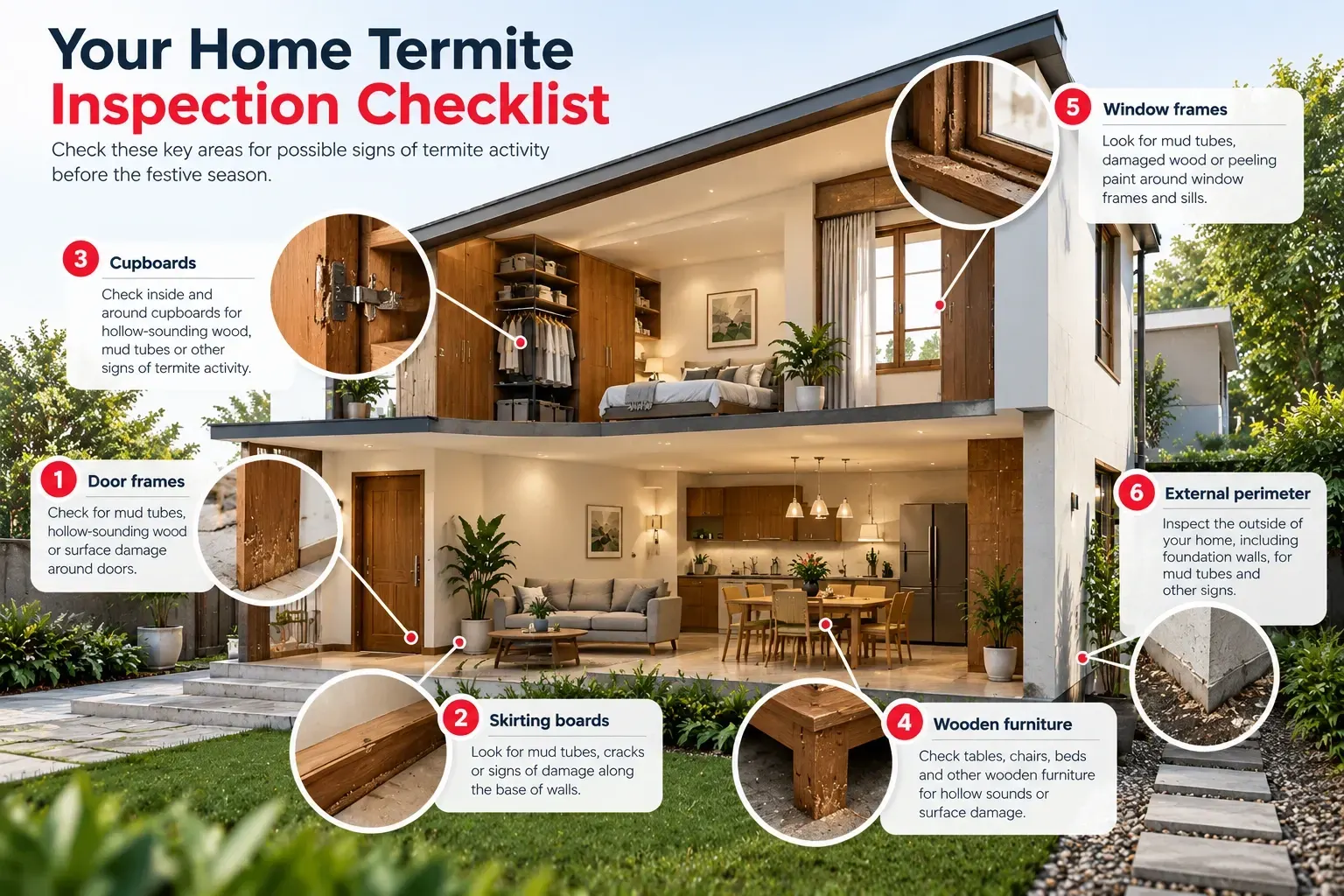
You don't need to inspect every corner of your house randomly. Start with areas that contain wood or have a history of dampness
| Area | What to look for |
|---|---|
| Wooden furniture | Hollow-sounding wood, blistered surfaces or unusual damage |
| Door and window frames | Soft wood, damaged edges or paint that appears uneven |
| Skirting boards | Mud tubes, cracks or signs of wood damage |
| Cupboards and wardrobes | Damaged wooden panels, hollow sections or discarded termite wings |
| Walls and corners | Mud tubes running along walls, floors or other surfaces |
| Storage areas | Termite activity around wooden boxes, paper and stored materials |
| Areas near plumbing | Damp wood, water leakage or other moisture-related issues |
Not every crack, patch of peeling paint or damaged wooden surface indicates termites. However, if you notice several unusual signs together, it is worth getting the area checked.
While cleaning your home, pay attention to these common warning signs.
| Sign | What it could mean |
|---|---|
| Mud tubes | Narrow, earth-like tunnels along walls, foundations or wooden structures may indicate subterranean termite activity. |
| Hollow-sounding wood | Wood that sounds unusually hollow when gently tapped may have been damaged internally. |
| Discarded wings | Small piles of shed wings near windows, doors or light sources may indicate termite swarmers. |
| Bubbling or uneven paint | Paint that appears blistered may be associated with moisture or concealed damage, including termite activity. |
| Damaged wooden surfaces | Wood that breaks, crumbles or appears weakened may need closer inspection. |
| Small openings in wood | Unusual holes or damaged edges can be a reason to investigate further. |
| Doors or windows that suddenly stick | Changes in fit can have several causes, including humidity or structural movement, but should not be ignored when other signs are present. |
Remember, termites can remain hidden for long periods. The absence of visible signs does not always mean your home is free from termite activity.
A little preparation can make it easier to inspect the areas where termites may be hiding.
| Step | What you can do | Why it helps |
|---|---|---|
| Move items away from walls | Shift boxes, furniture and stored belongings where practical. | Makes hidden areas easier to access. |
| Check wooden furniture | Look at the backs, corners and undersides of furniture. | Helps reveal damage that is not visible from the front. |
| Inspect damp areas | Look around leaking pipes, bathrooms and areas with persistent moisture. | Moisture can contribute to conditions favourable to some termites. |
| Look behind stored items | Check cupboards, storerooms and areas where cardboard or paper is kept. | Helps identify concealed activity. |
| Note anything unusual | Record damaged wood, mud tubes or discarded wings. | Helps a pest control professional assess the issue. |
| Arrange a professional inspection | Get suspicious areas examined by a trained professional. | Helps determine whether termites are present and what treatment may be appropriate. |
Avoid breaking open damaged wood or disturbing suspected termite colonies unnecessarily before an inspection.
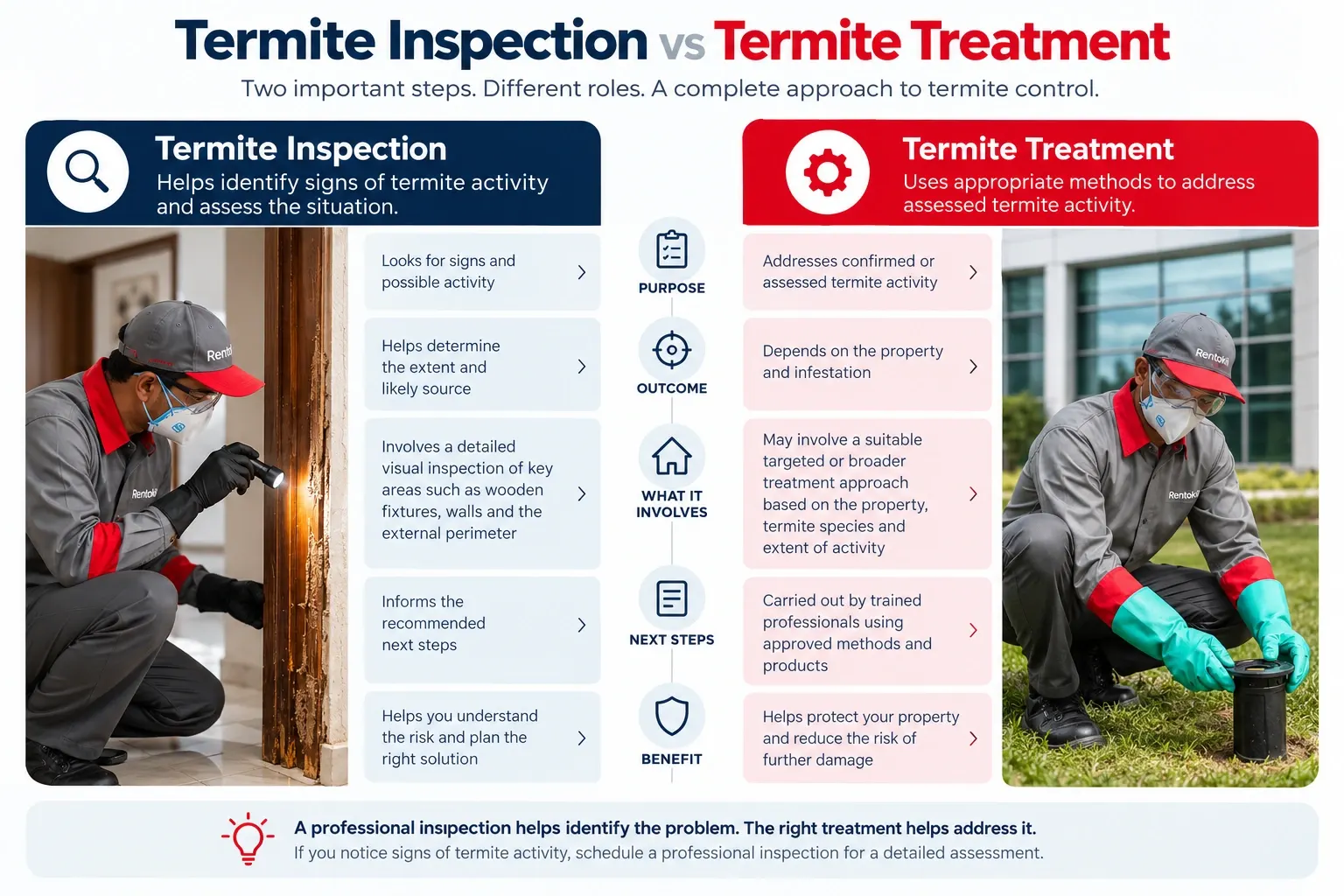
If you suspect hidden termite activity, learn more about professional termite inspection to understand how your property can be assessed for signs of infestation.
Regular cleaning helps keep your home organised, but it cannot guarantee termite prevention. Termites can enter through concealed routes and remain active inside wooden structures even in a clean home.
There are, however, a few practical steps that can help reduce the risk.
In India, the pre-monsoon and monsoon periods are useful times to pay closer attention to termite activity. Rainfall and changing moisture conditions can coincide with termite swarming, making winged termites and discarded wings more noticeable around homes. However, termites can remain active inside buildings throughout the year.
The best time to arrange termite treatment in India is when an infestation is identified or a professional assessment indicates that preventive treatment is needed, not simply during a particular season.
The appropriate treatment method and timing depend on the termite species, the extent of activity, the property's condition and the treatment system being used.
Explore termite control and treatment options from Rentokil PCI to learn more about professional termite management.
If you notice suspicious signs, arrange a professional termite inspection rather than waiting for a particular season.
If you notice possible termite activity, it is better to have the situation assessed before the festive preparations are complete.
The appropriate treatment depends on the termite species, the location of the activity and the extent of the infestation. A professional can inspect the affected areas and recommend a suitable approach.
If treatment is required, plan it in advance. Follow the service provider's instructions about re-entry, ventilation, cleaning and any precautions for children, pets and food preparation areas.
This also helps you avoid last-minute disruption when guests are expected.
Get Your Home Festive-Ready with Rentokil PCI
A freshly cleaned home is always welcoming, but keeping it in good condition means looking beyond what is visible.
Before you finish your festive cleaning, take a few minutes to check your wooden furniture, door frames, cupboards and other areas where termite activity may go unnoticed.
If you spot unusual damage or suspect termites, book a pest inspection to have the situation assessed.
With Rentokil PCI, you can explore professional termite management solutions suited to your property's needs.
Because getting your home ready for the festive season should be about welcoming guests, not worrying about hidden damage.
Common warning signs include mud tubes along walls, discarded wings near windows or doors, hollow-sounding wood and unusual damage to wooden furniture or door frames. These signs may indicate termite activity, but a professional inspection can help confirm the cause.
Check wooden furniture, cupboards, wardrobes, door and window frames, skirting boards, storage areas and wall-floor junctions. Pay particular attention to areas affected by moisture or leaks. Termites can remain concealed inside wood, so a visual check may not reveal the full extent of activity.
Move furniture and stored items away from walls where practical, clear access to cupboards and wooden fixtures, and note any unusual damage, mud tubes or discarded wings. Avoid breaking open damaged wood or disturbing suspected termite activity before the inspection.
Yes. Termites can feed inside wooden furniture and other timber structures, leaving the outer surface relatively intact while internal damage develops. Hollow-sounding wood, weakened sections or unexplained surface changes may warrant further investigation.
Avoid disturbing the suspected activity, note where you found the signs and arrange a professional termite inspection. Mud tubes and discarded wings can indicate termite activity, but assessment is needed to determine whether termites are present and what action may be appropriate.
No. Regular cleaning can reduce clutter and make it easier to identify warning signs, but it cannot guarantee termite prevention. Address water leaks, manage persistent dampness, avoid accumulating paper or cardboard in vulnerable areas, and arrange an inspection if you notice suspicious activity.
If you notice possible termite activity before a gathering, arrange an inspection promptly rather than automatically booking treatment. A professional can assess the situation and recommend whether treatment is necessary. If treatment is required, plan ahead and follow the provider’s instructions on re-entry, ventilation and other precautions.
Termite activity can remain hidden inside wood and other structures. Arrange a professional inspection to assess warning signs and determine the appropriate next steps.