Registered Residential Customers
Manage Your Home Services
Termites are often called “silent destroyers” for a reason. Long before visible damage appears, they may already be feeding inside wooden furniture, walls, flooring, or structural areas of your home.
Unlike other pests, termites usually stay hidden — making it difficult to detect an infestation early. By the time homeowners notice the damage, repairs can become expensive and difficult to manage.
Knowing the early warning signs can help protect your property before the problem spreads further.
Here are five hidden signs that could indicate termites inside your house
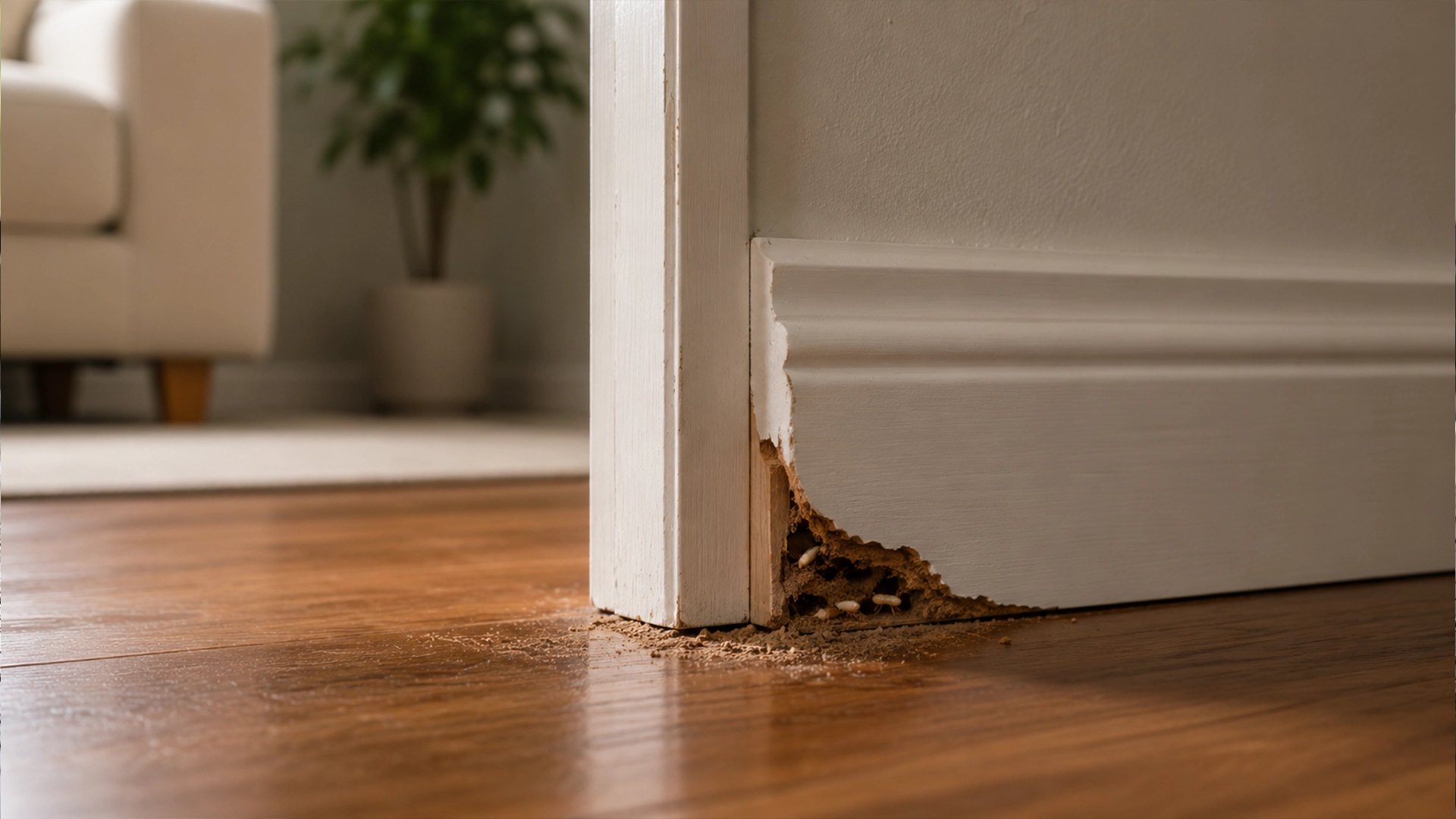
One of the clearest signs of termite activity is the appearance of termite mud tubes.
These pencil-sized tunnels are built by subterranean termites to travel safely between their nest and food source while staying protected from light and dry air.
You may spot mud tubes:
Even if the tubes appear inactive, they should never be ignored.
Termites feed on wood from the inside out, which means damage often remains hidden beneath the surface.
If wooden furniture, doors, or walls sound hollow when tapped, it may be evidence of termite infestation inside the structure.
Over time, affected wood may also:
Humidity caused by termite activity can sometimes warp wooden frames, making doors and windows difficult to open or close properly.
Many homeowners mistake this for seasonal swelling or moisture issues, when in reality, termites may already be active inside the wood.
Termites often swarm during warmer or humid months when reproductive termites leave the colony to form new nests.
After swarming, they shed their wings near:
Small piles of discarded wings are often one of the earliest visible signs of a growing termite infestation.
Walls affected by termites may develop paint bubbles, uneven patches, or slight surface damage that resembles water leakage.
This happens because termites create moisture while tunnelling beneath surfaces.
If wall damage appears without an obvious plumbing issue, a professional termite inspection may be necessary.
A termite infestation rarely stays limited to one area. Over time, termites can spread silently through furniture, wooden fittings, storage spaces, and structural components of the home.
Early identification helps:
The sooner termite activity is addressed, the easier it becomes to control.
DIY solutions may temporarily disturb visible termites, but hidden colonies often remain active behind walls, under flooring, or inside wooden structures.
Professional termite treatment from Rentokil PCI helps identify termite activity, locate infestation zones, and provide targeted treatment solutions designed for long-term protection.
If you notice any evidence of termite infestation in your home, early inspection can make all the difference.
Schedule a professional termite inspection with Rentokil PCI today and protect your home before hidden damage grows further
They feed on wood from the inside out while staying hidden behind walls, furniture, and flooring. Because they remain invisible for so long, they can cause extensive, expensive structural damage long before you notice any visible signs
Subterranean termites build these pencil-sized tunnels to travel safely. Look for them along walls, near skirting boards, around pipes, on ceilings, or near any wooden structures. Even if they look old or empty, they indicate termite activity.
As termites tunnel through wood, the moisture and humidity they generate can warp the wooden frames. This causes doors and windows to become tight, misshapen, and difficult to open or close smoothly.
DIY solutions usually only disturb the termites you can see on the surface. The main colony remains safe and active deep behind your walls or under the flooring. A professional service like Rentokil PCI is needed to locate and eliminate the entire hidden infestation.
Contact a professional pest control service for an inspection and treatment.