Registered Residential Customers
Manage Your Home Services
Flies can be a nuisance in your home, particularly around kitchens, garbage areas and other places where food or organic waste is present. They can also carry microorganisms from contaminated surfaces to food and household surfaces.
The most effective way to get rid of flies is to combine good hygiene, proper waste management, exclusion and appropriate fly-control methods.
Here are 10 practical ways to get rid of flies at home and help keep them away.
One of the easiest ways to reduce flies indoors is to prevent them from entering your home.
Check windows, doors, balconies and other potential entry points for gaps or damaged screens. Repair torn window screens and seal gaps around doors and windows where possible.
Keeping doors and windows closed when they are not needed can also help reduce fly entry.
Garbage and food waste can attract flies and may provide suitable breeding sites.
Use bins with tightly fitting lids and dispose of food waste regularly. Clean garbage bins periodically to remove food residue and odours.
If possible, keep household waste away from food-preparation areas.
Good waste management is also an important part of effective fly control.
A clean kitchen gives flies fewer food sources.
To reduce fly activity:
Small amounts of food residue can attract flies, so regular cleaning can make your home less appealing to them.
For a more detailed guide to removing and controlling flies in the home, see How to Get Rid of Flies at Home.
Some fly species can be associated with damp areas, drains and organic material that accumulates in plumbing.
Clean kitchen and bathroom drains regularly and address leaks or persistent moisture problems.
If flies repeatedly appear around a particular drain, simply removing the adult flies may not solve the problem. The source should be investigated and cleaned.
Flies are relatively weak fliers. Air movement from a ceiling or table fan can make it more difficult for them to fly and land comfortably.
Using a fan in areas where flies are particularly active can therefore help reduce their activity.
However, fans should be considered a supplementary measure rather than a replacement for good sanitation and source control.
A simple vinegar trap can help catch some adult flies.
You can place apple cider vinegar in a small bowl and add a drop of dish soap. The vinegar can attract certain flies, while the soap reduces the surface tension of the liquid.
Place the trap away from food-preparation areas and replace it regularly.
Keep in mind: traps can help reduce visible adult flies, but they will not eliminate the problem if a breeding source remains.
Some plants and household scents are commonly used as natural fly repellents. However, their effectiveness can vary depending on the fly species and conditions.
Natural repellents should therefore be considered a supplementary measure rather than the main method of fly control.
If you're interested in prevention-focused tips, see our guide to natural ways to keep flies out of your home.
If you only have a few flies indoors, a fly swatter can provide a quick way to remove individual adult flies.
However, this method only addresses the visible flies. If new flies continue to appear, look for the source attracting or breeding them.
For larger or recurring infestations, consider professional fly control.
Sticky fly paper or ribbons can help capture adult flies in areas where fly activity is high.
Place them away from food-preparation areas and in locations where people are unlikely to come into contact with them.
As with other traps, sticky fly paper works best when combined with measures that address the source of the infestation.
If you continue to see large numbers of flies despite cleaning and prevention, there may be a hidden breeding source that you cannot easily identify.
Professional pest control can help identify potential breeding and harbourage areas and determine an appropriate treatment approach.
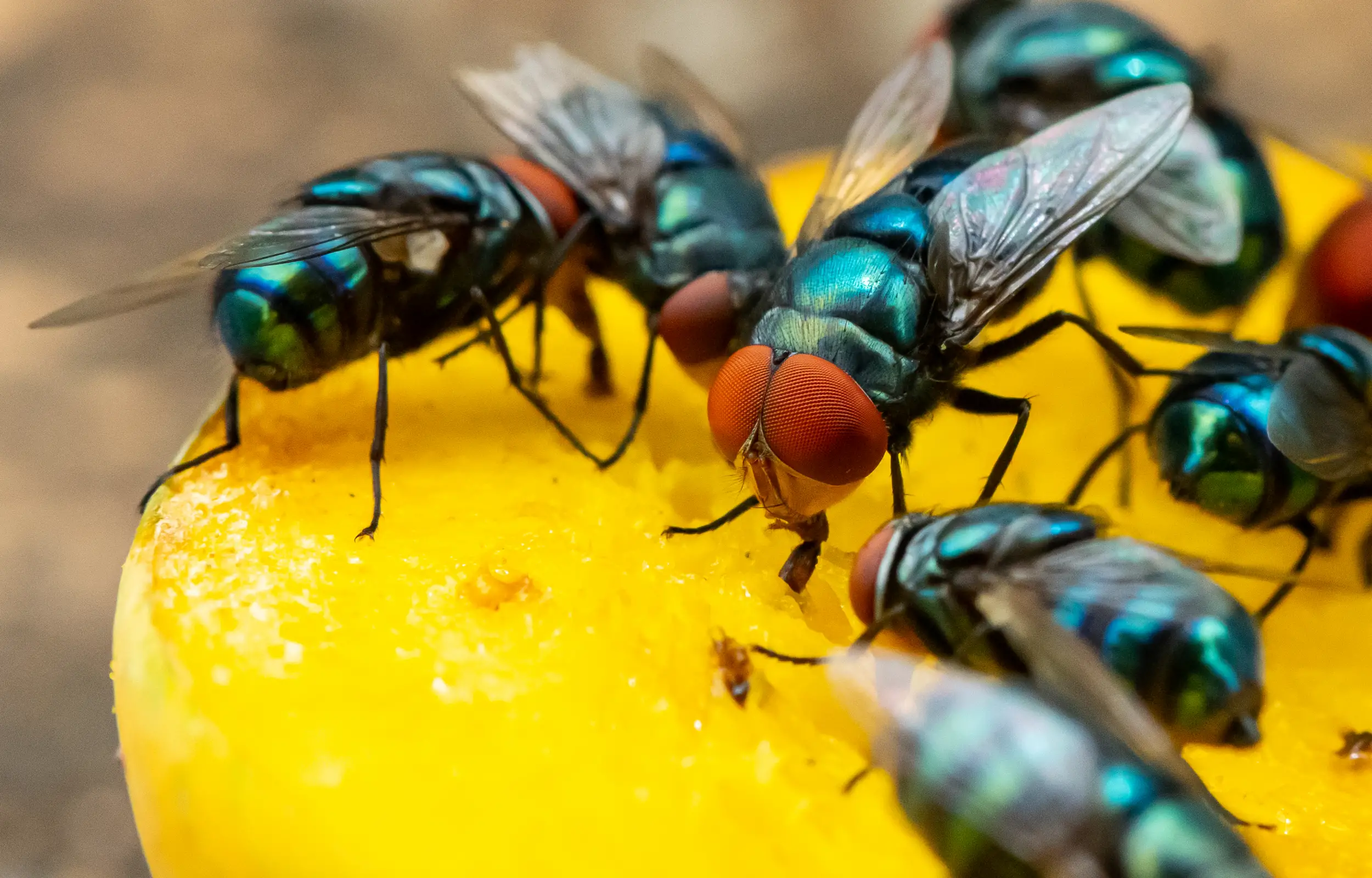
Home remedies and simple prevention measures can help with occasional flies. However, persistent fly activity may indicate an underlying breeding source.
If flies continue to appear despite consistent cleaning and prevention, professional pest control can help identify the source and recommend an appropriate treatment.
You can learn more about Rentokil PCI's fly control solutions.
Check windows, balcony doors and other possible entry points for gaps or damaged screens. Sealing these openings and keeping doors closed when possible can reduce opportunities for flies to enter.
A simple homemade trap using apple cider vinegar and a drop of dish soap works wonders. The vinegar attracts the flies, while the soap breaks the liquid's surface tension, causing them to sink.
Yes. Plants like tulsi (holy basil), mint, and marigolds give off strong natural scents that flies actively dislike. Placing them near windows and doorways creates a natural barrier.
Check areas around windows and doors, waste bins, balconies, plant saucers, leaks and other places where moisture or organic material may accumulate. Finding and correcting these conditions can help reduce recurring activity.
DIY methods can help with occasional flies, but recurring activity may need professional attention. Get expert fly control for your home.
Get Fly Control Help