Registered Residential Customers
Manage Your Home Services
Finding a bird nesting in your chimney or vents can be more than just a noisy nuisance. It can lead to fire hazards, blockages, and health risks.
Here is a quick guide on how to bird-proof your home effectively and humanely.
A chimney cap is your first line of defense. These are metal covers with mesh sides that allow smoke to escape while keeping birds (and other critters) out.
Birds love dryer vents and bathroom exhausts because they are warm and sheltered.
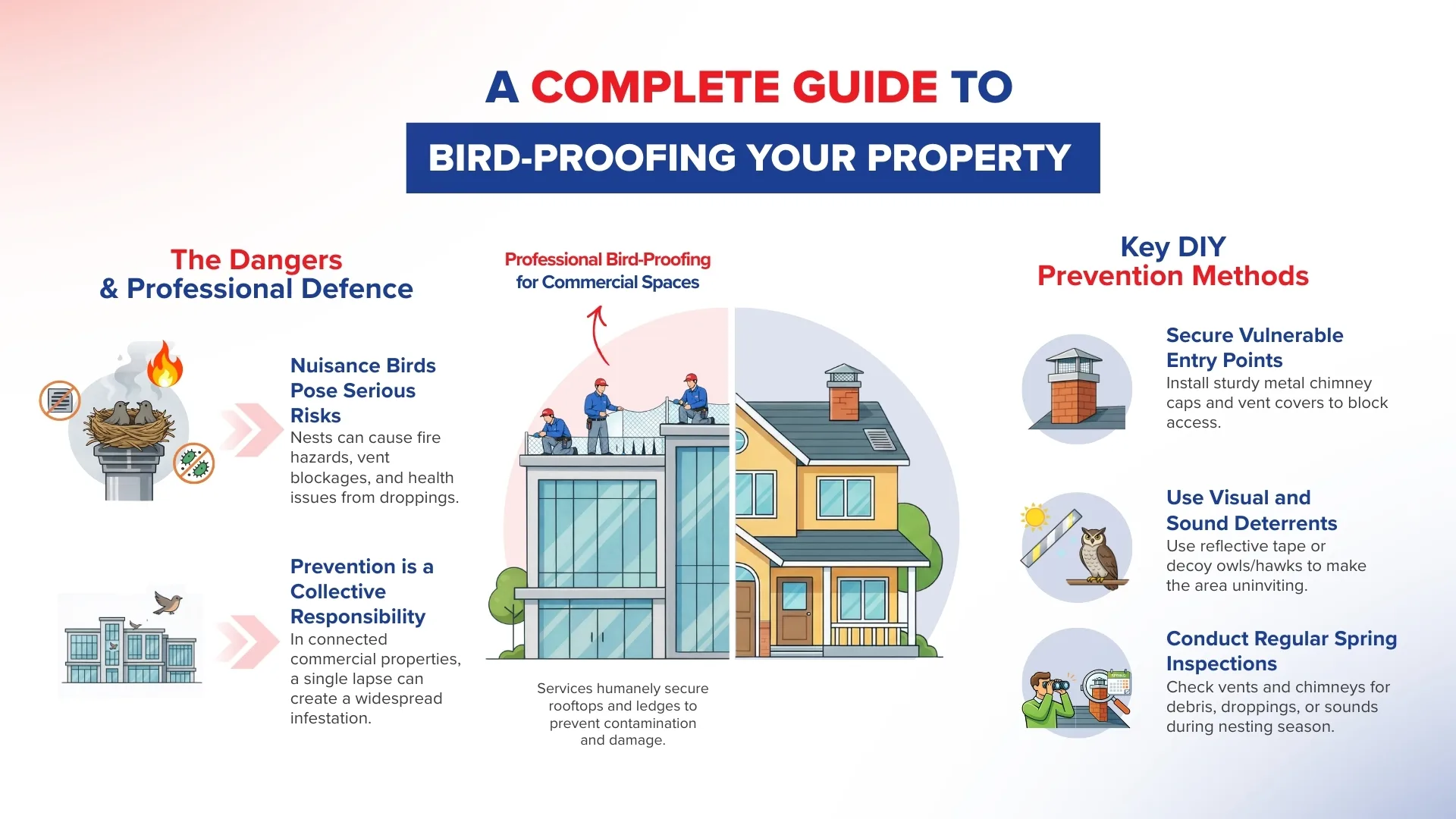
If you have a persistent bird trying to scout your home, make the area uninviting.
Listen for scratching, chirping, or fluttering sounds, and look for nesting debris near your fireplace or vent openings.
Yes. Nests are made of highly flammable materials like twigs and grass, which can ignite from heat or sparks.
Yes. Nests can block ventilation (leading to carbon monoxide buildup) and may harbor mites, lice, or bacteria.
It depends. Many birds, such as Chimney Swifts, are protected by law. You usually must wait until the babies have fledged and the nest is empty.
Definitely. You need to remove all debris and droppings to prevent future fire hazards and lingering odors.