Registered Residential Customers
Manage Your Home Services
The term "quiet destroyers" is a fitting description of termites. With little to no outward indication of their presence, they can infest a house or place of business for years, eating away at wood and other materials from the inside out. The damage is frequently severe and very costly to fix by the time you discover the drooping floors or hollow-sounding walls.
This challenge has long plagued homeowners and pest control professionals, but thanks to rapid advancements in technology, the game is changing. The integration of Artificial Intelligence (AI) and the Internet of Things (IoT) is ushering in a new era of "smart pest control," transforming termite detection from a reactive chore into a proactive, intelligent defense.
The conventional method depends on manual inspections, in which a termite infestation is visually checked for by a pest management specialist. This approach works well but has limitations. You'll miss a lot of what's going on in between if you only check the forecast once a week. Termites may be active in difficult-to-reach locations, such as under floors or in wall cavities, making early visual diagnosis all but impossible.
This change is made possible by the Internet of Things (IoT). Discrete, tiny sensors are positioned in strategic locations around a property, such as in the basement, close to the foundation, or in recognized termite hotspots.
These sensors are constantly active and watchful. They are able to identify a variety of minute indicators of termite activity, including:
Acoustic Signatures: Some sensors are able to "listen" for termites' subtle tapping or gnawing noises inside a wall.
Levels of Moisture: Termite infestations can result in an increase in moisture, which can be identified and reported.
Vibration: Termites' bodily movements can produce tiny vibrations that the sensors detect.
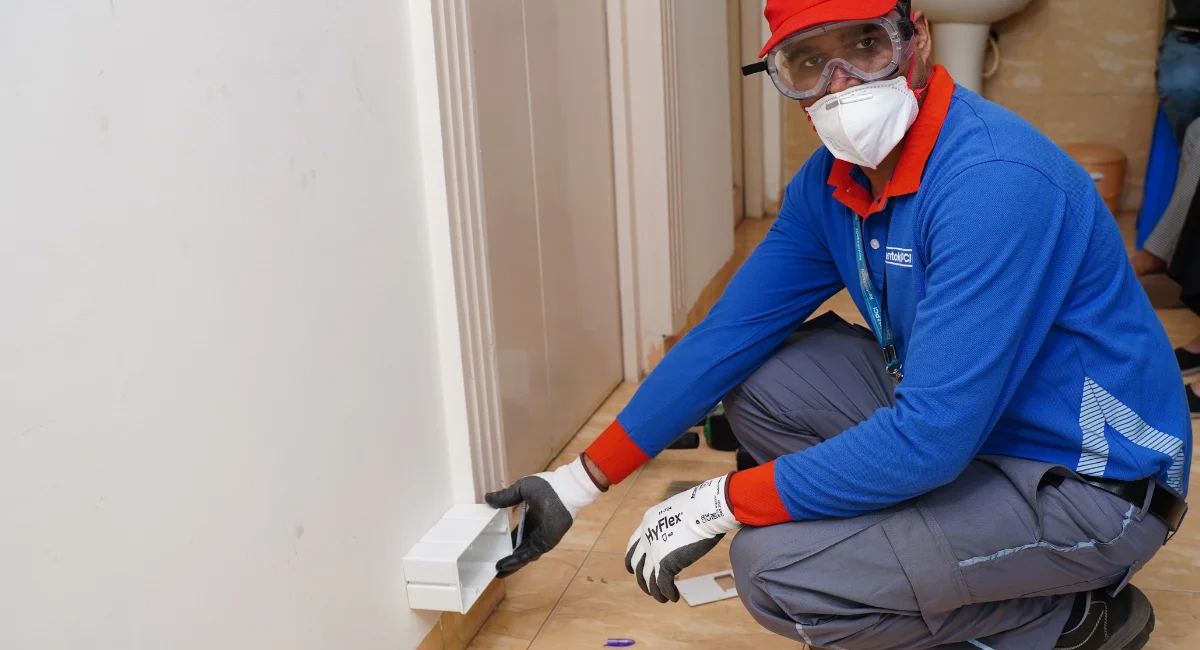
Data collection is only half the fight. Artificial intelligence can help with this. As the brain, the AI system examines the continuous flow of data from the Internet of Things sensors to spot trends and abnormalities.
Early Warning System: The artificial intelligence has been trained to identify the distinct indicators of termite activity. It provides a dependable early warning system that detects infestations long before they become an obvious issue since it can distinguish between the sound of termites chewing and the vibration from a passing car.
Predictive Analysis: The AI can create predictive models by fusing sensor data with environmental variables like soil moisture and weather. By identifying termite activity hotspots, it enables more focused and strategic defense.
Precision Targeting: The AI doesn't merely state that "termites might be present" when an alert is set off. It can identify the precise spot where the action is taking place, right down to the wall or floorboard. This makes it possible for a pest control expert to apply a targeted, localized treatment, which is less intrusive and more efficient than a full-home, extensive fumigation.
There are several benefits to this innovative, clever method of pest control:
Proactive Protection: It moves the emphasis from fixing harm to avoiding it altogether.
Economical: Early infestation detection saves thousands of dollars in structural damage. Additionally, the focused treatments are less expensive than broad-spectrum ones.
Peace of Mind: Homeowners may relax knowing that their property is being intelligently and continuously monitored.
Sustainability: It is a more environmentally friendly choice because it may employ precise, localized treatments, which lessen the need for vast amounts of chemicals.
IoT and AI are no longer merely futuristic ideas. They are here now, transforming the pest management sector and offering a more intelligent, efficient method of defending our residences and places of business against unseen devastation.
If you do encounter flying termites, swift action is necessary. Here’s how you can manage the immediate situation and address the root of the problem:
Immediate Swarm Control: For a small number of flying termites, a vacuum cleaner is an effective tool for removal. You can also use bug zappers placed outdoors to attract and eliminate them, as they are drawn to light.
Don't Panic and Use Pesticides Indiscriminately: While it may be tempting to spray the swarm with a general-purpose insecticide, this will only kill the swarmers and will not affect the main colony. The colony will continue to thrive and produce more swarmers in the future.
Seek Professional Inspection and Treatment: The most critical step is to contact a licensed pest control professional. A professional can conduct a thorough inspection to determine the extent of the infestation and locate the parent colony. They have access to specialized equipment and treatments, such as liquid termiticides and baiting systems, which are necessary to eliminate the entire colony and prevent future infestations.
The appearance of flying termites is a clear call to action. By correctly identifying them, implementing robust preventative strategies, and seeking professional assistance when necessary, you can protect your home from the silent but significant threat of termite damage. Early detection and proactive control are your best allies in the fight against these destructive pests.