Registered Residential Customers
Manage Your Home Services
For any homeowner facing a rodent problem, the first step towards an effective solution is correct identification. Determining whether you are dealing with a rat or a mouse is fundamental.
The answer is yes, it absolutely matters. While they are both unwelcome guests in our homes, rats and mice are different species with different habits. Knowing which one you're dealing with is the crucial first step to getting rid of them effectively. It can be tricky because a young rat often looks like an adult mouse, but this simple guide will help you spot the key differences.
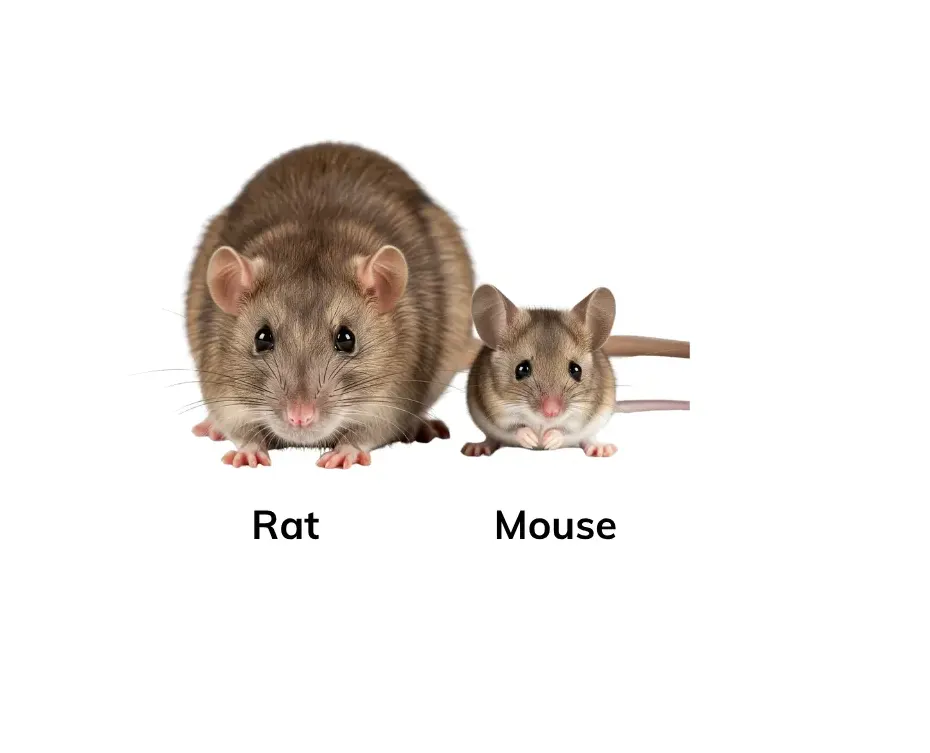
The most reliable way to tell the difference rat and mouse is to look at their physical characteristics. If you get a clear look at the rodent, here’s what you should pay attention to.
A Note on Size: An adult rat is significantly larger than an adult mouse. The confusion happens with young rats. The best way to tell a young rat from an adult mouse is to look at its head and feet. A young rat will have a large head and big feet that look out of proportion with its body, much like a puppy. An adult mouse will be small but have a head and feet that are perfectly proportioned to its slender frame.
More often than not, you won’t see the rodent itself, but you will see the evidence it leaves behind. The droppings are one of the most definitive ways to identify your pest.
Rat Droppings: These are large, typically about 12-18 mm long (about the size of an olive or bean). They are usually dark and spindle-shaped with blunt ends. You will find them in small, concentrated piles.
Mouse Droppings: These are much smaller, around 3-6 mm long, and look like small, dark grains of rice with pointed ends. Mice defecate constantly as they travel, so you will often find their droppings scattered randomly.
Identifying your rodent guest isn't just for curiosity's sake; it directly impacts how you handle the problem.
Control Methods: A trap designed for a small, 20-gram mouse will be completely ineffective against a large, 400-gram rat. You need to use the right size trap for the right pest.
Behavioral Habits: Mice are naturally curious and will investigate new things, like a freshly set trap, quite quickly. Rats, on the other hand, are very cautious (a trait called neophobia) and may avoid a new trap for several days. Understanding this difference rat and mouse behaviour is key to a successful trapping strategy.
Scope of Infestation: Mice tend to live and forage in a very small area, often just a few meters from their nest. Rats have a much larger territory and can travel further, meaning an infestation could be more widespread.
In summary, while both are a nuisance, rats and mice are not the same. By looking at their physical features and the clues they leave behind, you can make a positive identification. This knowledge will empower you to choose the correct course of action and more effectively reclaim your home from these unwanted visitors.