Registered Residential Customers
Manage Your Home Services
The Indian subcontinent is home to a rich and diverse ecosystem, which includes a wide variety of snakes. While the vast majority of these snakes are non-venomous and play a vital role in our environment, it is important to be aware of the few species that are venomous.
Understanding the primary types of venomous snakes in India is not about creating fear, but about fostering respect and promoting safety through knowledge. This guide focuses on the most medically significant species, often referred to as the "Big Four."
These four species are responsible for the majority of significant snakebite incidents across the country, primarily because their habitats often overlap with human settlements.
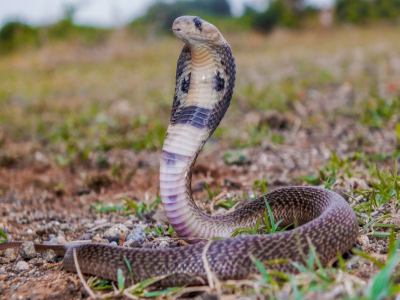
Identification: This is one of the most recognized venomous snakes in India. It is famous for its impressive hood, which it spreads when threatened. The back of the hood often has a distinct mark resembling a pair of connected spectacles. Their color can vary from black or dark brown to a yellowish-white.
Habits: Cobras are highly adaptable and can be found in a variety of environments, including forests, fields, and unfortunately, near human dwellings where they hunt for rodents.
Venom: Their venom is primarily neurotoxic, affecting the nervous system.
Identification: The common krait is a smooth, glossy snake that is typically black or bluish-black with a series of distinct, thin white bands across its body.
Habitats: This snake is a nocturnal hunter. Its activity at night is a key reason why bites often occur when people are sleeping on the floor in rural areas. It is generally not aggressive unless provoked.
Venom: Its venom is extremely potent and neurotoxic. Due to the high potency of its venom, some consider it to be the most venomous snake found in India from a purely toxicological standpoint.
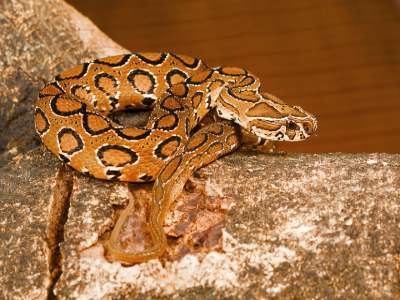
Identification: The Russell's Viper has a stout, thick body with rough-looking (keeled) scales. Its most defining feature is a pattern of three rows of dark, reddish-brown, chain-like spots running down its body.
Habits: This snake is known for its loud, hiss-like warning sound when threatened. It is found in a wide range of habitats, from grasslands to farmlands.
Venom: Its venom is primarily hemotoxic, causing issues like blood clotting problems, pain, and swelling.
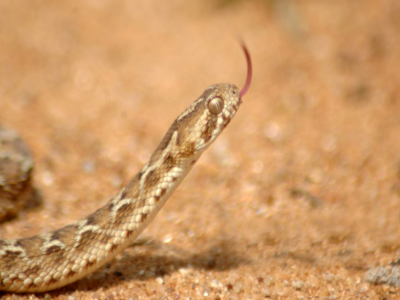
Identification: This is the smallest of the "Big Four," but it is highly venomous. It has a rough, keeled-scale appearance and is typically brown, greyish, or sandy in color with a pattern of light-colored spots.
Habits: When threatened, the Saw-scaled Viper rubs its serrated scales together to produce a distinctive, loud "sizzling" sound as a warning.
Venom: Like the Russell's Viper, its venom is hemotoxic.
Coexisting safely with wildlife involves taking sensible precautions. The best approach is to make your immediate surroundings less attractive to snakes and their prey.
Keep Your Surroundings Clean: Rodents are a primary food source for many snakes. Keep your home and yard clean and free of garbage to reduce rodent populations.
Be Cautious in the Dark: Use a flashlight or torch when walking outside at night. Snakes are often active after dark, and a light will help you see and avoid them.
Avoid Provocation: Snakes are not aggressive and will not chase you. They bite as a defensive reaction when they are startled, stepped on, or feel threatened. The best thing you can do if you see a snake is to maintain a safe distance and allow it to move away on its own.
Check Before You Reach: Be careful when reaching into woodpiles, piles of leaves, or rocky areas where snakes might be sheltering.
By understanding these primary types of venomous snakes in India and practicing caution, we can significantly reduce the risk of negative encounters and live more safely alongside our natural wildlife.a