Registered Residential Customers
Manage Your Home Services
While most mosquitoes disappear when the temperature drops, a specialized group of "super" mosquitoes uses a biological trick called autogenous breeding to stay active and reproductive all winter long.
Here is the science behind how these pests survive the cold and why they are a year-round threat.
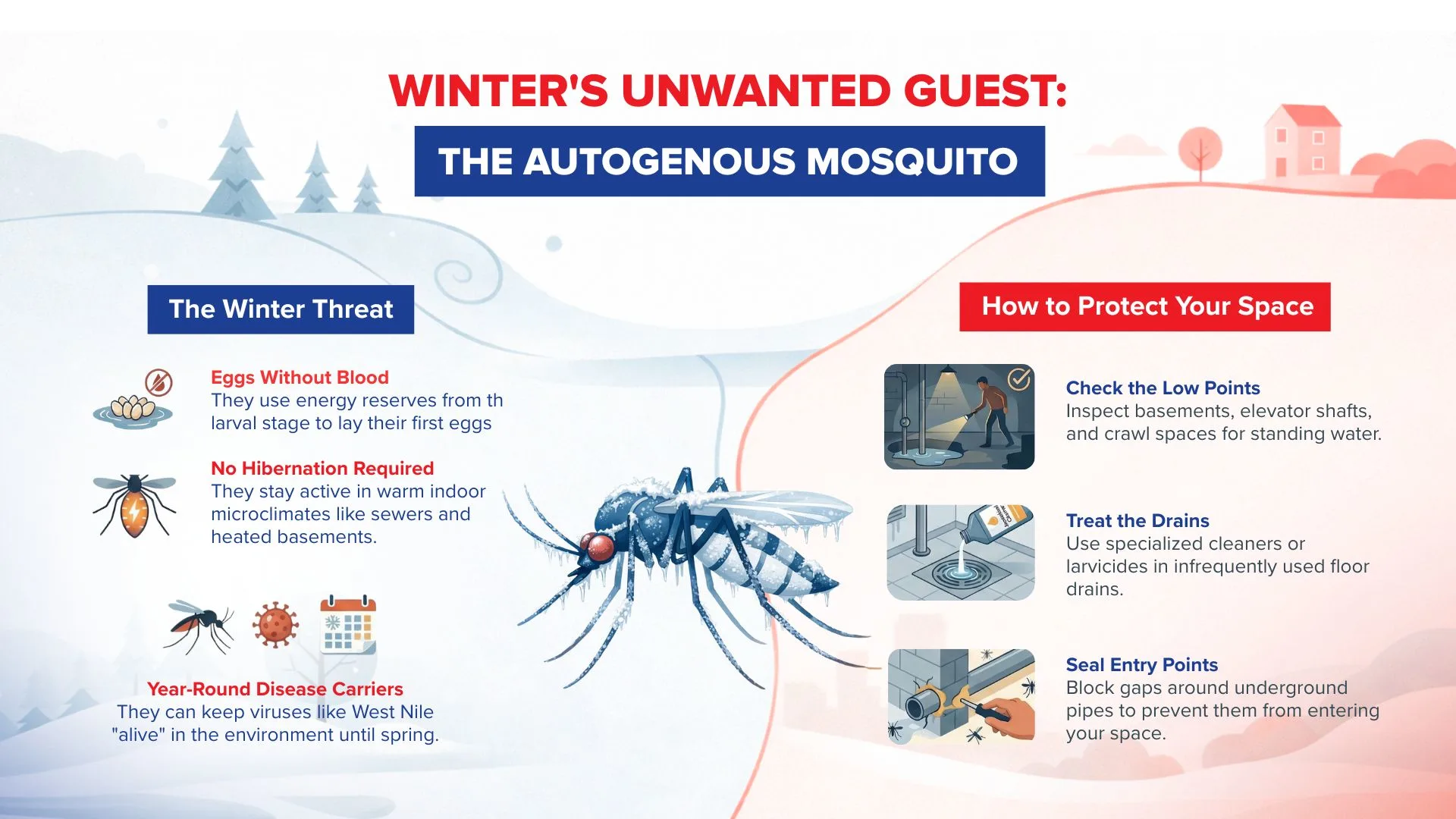
Normally, a female mosquito must have a blood meal to get the protein needed to lay eggs. Autogenous mosquitoes are different:
The "No-Blood" Start: They can produce their first batch of eggs without biting anyone, using energy reserves stored from their larval stage.
Stenogamy: They can mate in tiny, enclosed spaces like drains or crawl spaces, unlike regular mosquitoes that need large outdoor swarms.
These mosquitoes (most notably the Culex pipiens f. molestus) have adapted to urban environments:
No Hibernation: While others sleep, they stay active as long as they find a warm microclimate (like a heated basement, sewer, or subway).
Indoor Survival: Because they don't need to go outside for blood or mating, they can build massive populations inside buildings completely undetected.
Disease Carriers: They can bridge the gap for viruses like West Nile, keeping the disease "alive" in the environment until spring arrives.
Standard outdoor treatments for mosquitoes often miss these hidden winter populations. To stop them:
Check the Low Points: Inspect elevator shafts, basements, and crawl spaces for even a few millimeters of standing water.
Treat the Drains: Use specialized cleaners or larvicides in floor drains that aren't used frequently.
Seal Entry Points: Ensure gaps around underground pipes and cables are sealed to prevent them from moving from sewers into your living space.
Dengue, Chikungunya, Zika, and Yellow Fever.
Mostly during the daytime (early morning and late afternoon).
In small, artificial containers holding clean, stagnant water (pots, buckets, tires).
Look for distinct black and white stripes on its legs and body.