Registered Residential Customers
Manage Your Home Services
Flies can become more noticeable during India's rainy season as increased humidity, moisture and wet organic waste create favourable conditions for fly activity. Rain can also drive flies towards sheltered areas such as kitchens, balconies, garbage areas and other protected spaces around homes.
The best way to prevent flies during the monsoon is to reduce moisture and food sources, keep waste covered, maintain clean food preparation areas and limit the points where flies can enter your home. Here are practical steps you can take during the rainy season to keep fly activity under control.
Rainy weather can make fly activity more noticeable around homes. Increased humidity, moisture and wet organic material can create favourable conditions for flies to feed, rest and breed. Heavy rainfall can also encourage flies to seek shelter in protected areas, including kitchens, balconies, waste-storage areas and other parts of the home.
The rain itself does not necessarily cause an increase in flies. Instead, the moisture and environmental conditions that accompany the rainy season can make certain areas more suitable for fly activity
| Rainy-season condition | Why it can contribute to fly activity |
|---|---|
| High humidity | Moist, humid conditions can support fly activity and make the surrounding environment more favourable. |
| Wet organic waste | Food scraps and other decomposing organic material can provide flies with accessible food and potential breeding material. |
| Uncovered or overflowing bins | Wet waste can become more attractive to flies, particularly when bins are left open or are not emptied regularly. |
| Blocked or dirty drains | Drains can retain moisture and organic matter, creating areas that may attract certain types of flies. |
| Waterlogged areas | Water that collects around the home can contribute to damp conditions and may support other sources of pest activity. |
| Heavy rainfall | Flies may seek sheltered locations when exposed to rain, bringing them closer to homes and other protected spaces. |
Understanding these conditions is important because removing the visible flies alone may not address what is attracting them. Managing wet waste, reducing excess moisture, keeping potential entry points protected and maintaining clean surroundings can help limit fly activity during the rainy season.
Rainy weather can create conditions that make fly activity more noticeable around homes. Increased moisture, wet organic waste and sheltered areas can provide flies with suitable places to feed, rest or breed. Heavy rainfall can also encourage flies to seek shelter indoors.
A few practical changes can help reduce fly activity during the monsoon and make your home less attractive to flies.
Wet food scraps and other organic waste can become particularly attractive to flies when temperatures, humidity and moisture levels are high. During the rainy season, keep kitchen waste in a tightly covered bin and avoid allowing food scraps to accumulate for long periods.
Clean the inside and surrounding area of the bin regularly, especially if it contains wet or decomposing waste. If you compost at home, make sure the compost container is properly covered.
This is especially important because different flies are attracted to different food sources. House flies are associated with decaying organic waste, while fruit flies are commonly attracted to ripe or fermenting fruit and other sugary substances.
After heavy rainfall, inspect areas around your home where moisture and organic material may accumulate. Pay particular attention to:
Keep drains clear of debris and accumulated organic matter. These areas can become potential fly hotspots if moisture and waste are allowed to build up. Rentokil PCI also identifies drains, drainage channels and areas where waste accumulates as places worth checking when investigating recurring fly activity.
Heavy rain can encourage flies to look for sheltered areas, and open windows or doors can provide an easy route indoors. Where possible, keep doors and windows closed during periods of heavy rainfall and use properly fitted fly screens where ventilation is needed.
Check screens regularly for tears, loose edges or gaps, particularly around kitchen windows, balconies and other areas where doors or windows are frequently opened.
For general year-round measures to reduce fly entry and activity, see our guide on how to keep flies away.
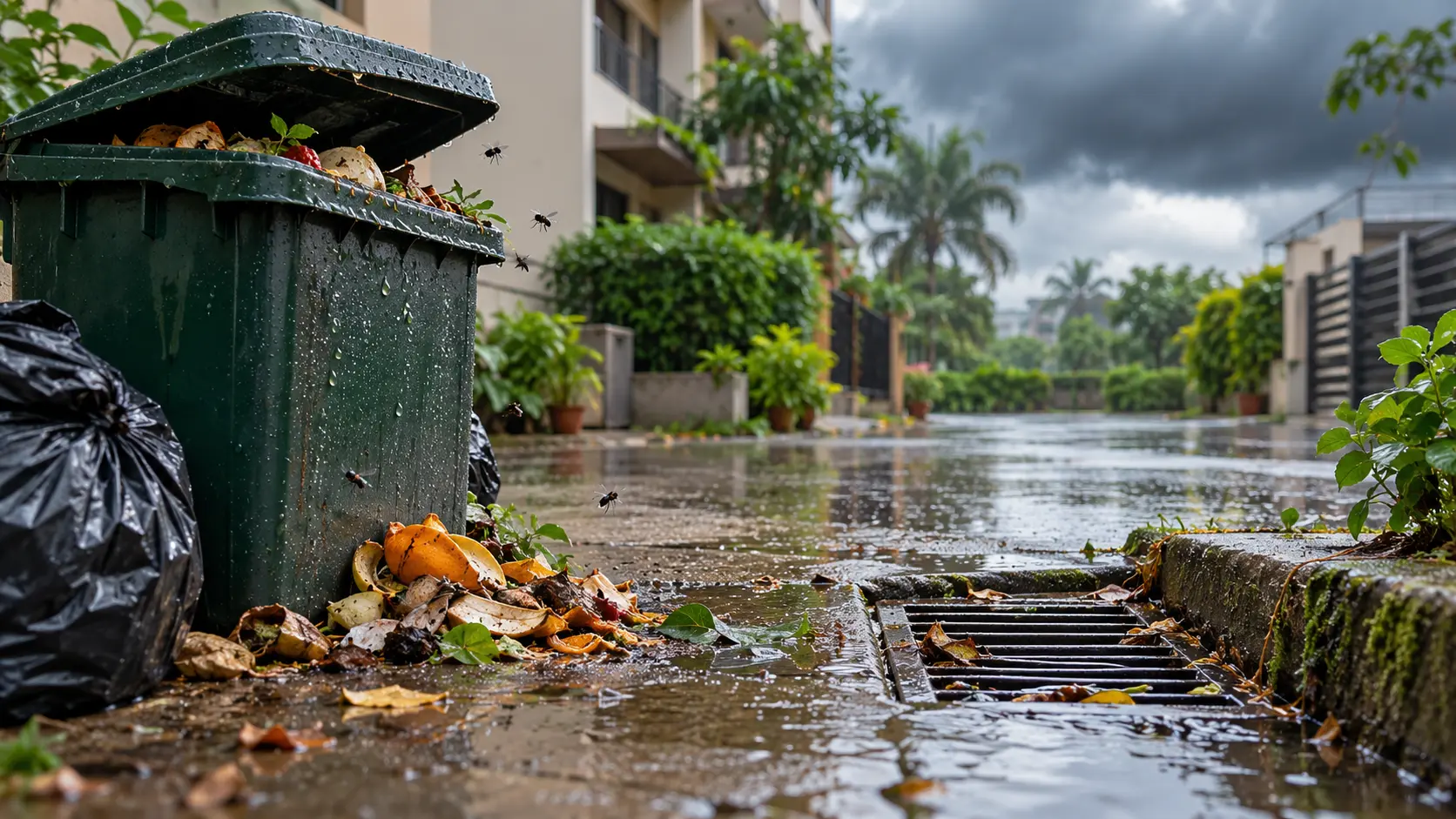
Keep food covered, particularly during and immediately after periods of heavy rain when fly activity may increase around sheltered areas of the home.
Store ripe fruits and other perishable foods appropriately, and clean food or drink spills as soon as they occur. Avoid leaving exposed food on kitchen counters or dining tables for extended periods.
The goal is not simply to remove flies after they appear, but to reduce the food sources that may encourage them to stay indoors.
If you are dealing with flies that are already active inside your home, our guide on how to get rid of flies at home covers removal methods in greater detail.
Rain can leave behind small pockets of water in places that are easy to overlook. After rainfall, check balconies, plant trays, utility areas, outdoor containers and other low-lying areas where water may collect.
Empty containers that have collected rainwater and address leaks or drainage problems that keep areas damp.
While removing standing water is particularly important for mosquito prevention, keeping your property dry and well-drained can also help reduce conditions that contribute to broader pest activity during the monsoon. Rentokil PCI's monsoon guidance recommends checking common water-collection points such as balconies, flowerpot trays and drains.
Don't focus only on the inside of your home. Outdoor sources can contribute to indoor fly activity, particularly when wet weather causes organic material to decompose more quickly.
After rainfall, check for and remove:
Keep outdoor bins tightly closed and clean up pet waste promptly. Removing these potential food and breeding sources can help make the area around your home less attractive to flies.
Seeing an occasional fly does not necessarily mean you have an infestation. However, repeated or increasing fly activity, particularly in the same area, is worth investigating.
Look for patterns such as flies repeatedly appearing around drains, waste areas, bins, damp locations or deteriorating food. You may also notice small dark spots or maggots around potential breeding areas.
If flies continue appearing despite cleaning, waste management and entry-point measures, the problem may be linked to a hidden food or breeding source that has not been addressed. Rentokil PCI identifies regular fly sightings, dark spots and maggots as signs that may warrant further investigation.
For more information on identifying these warning signs, see our guide to fly infestation
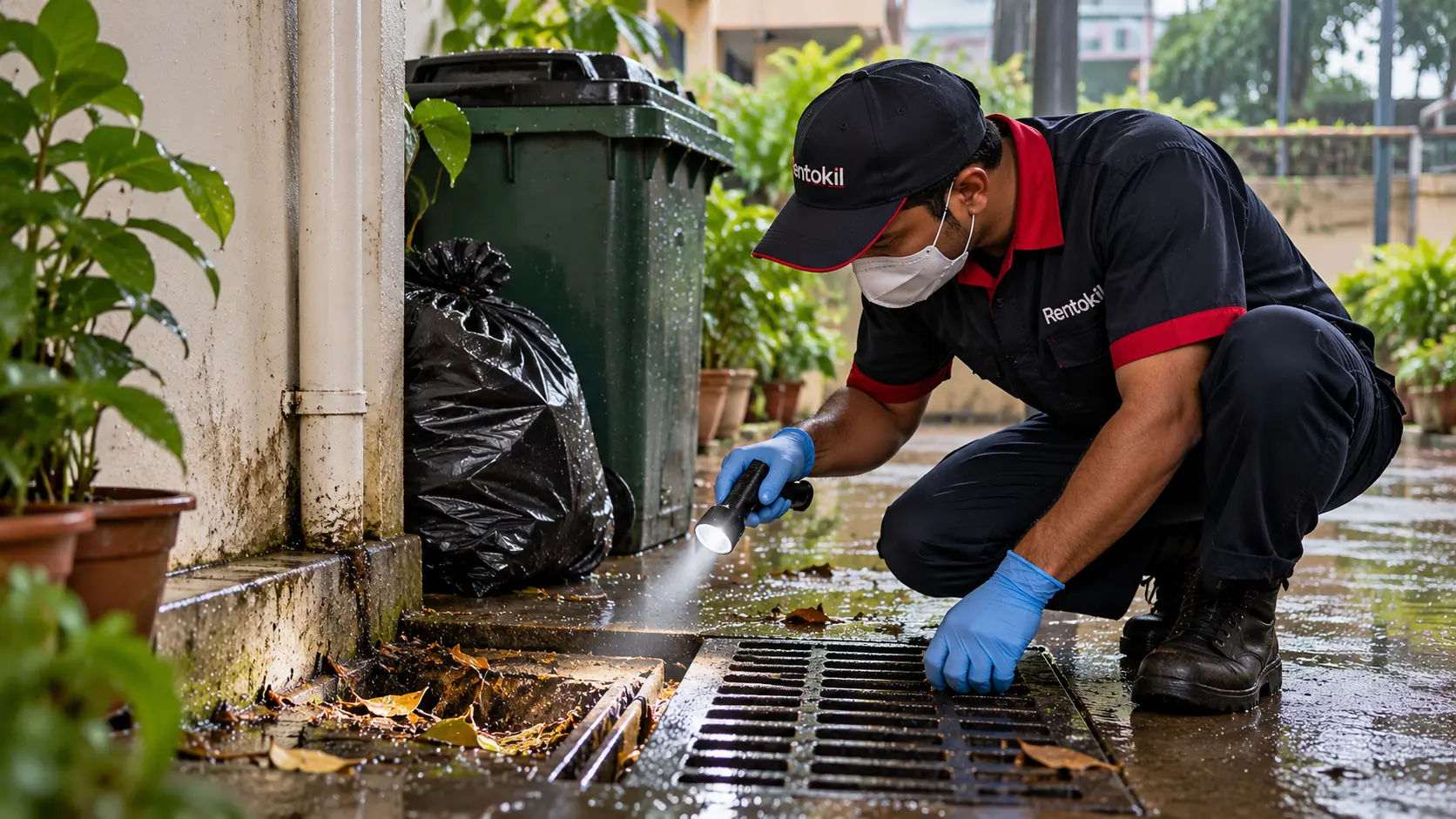
Occasional flies are not necessarily a sign of an infestation. However, persistent or increasing fly activity during the rainy season may indicate that an underlying food, moisture or breeding source has not been addressed.
Consider professional fly control if you notice:
Rather than focusing only on eliminating the adult flies you can see, professional pest control can help identify potential sources of fly activity and determine an appropriate treatment approach. This can be particularly useful when the source is hidden, difficult to access or located outside the immediate living area.
If recurring fly activity continues despite preventive measures, consider getting a professional fly inspection to identify the underlying cause and take appropriate control measures.
Rainy weather creates damp, humid conditions that attract flies and encourage rapid breeding, making homes an ideal target.
Mix apple cider vinegar with a few drops of dish soap in a bowl. The scent attracts flies, while the soap breaks the surface tension and traps them.
Fragrances like eucalyptus, peppermint, lavender, and lemongrass act as natural repellents that flies dislike. You can diffuse them or spray a diluted water mixture near entry points.
DIY remedies aren't foolproof. If cleanliness and natural traps fail to control a severe or persistent infestation, professional intervention is necessary to safely eliminate them.
Recurring fly activity may indicate a hidden food, moisture or breeding source. Rentokil PCI can help identify the cause and recommend an appropriate fly control solution.
Book a Fly Inspection