Registered Residential Customers
Manage Your Home Services
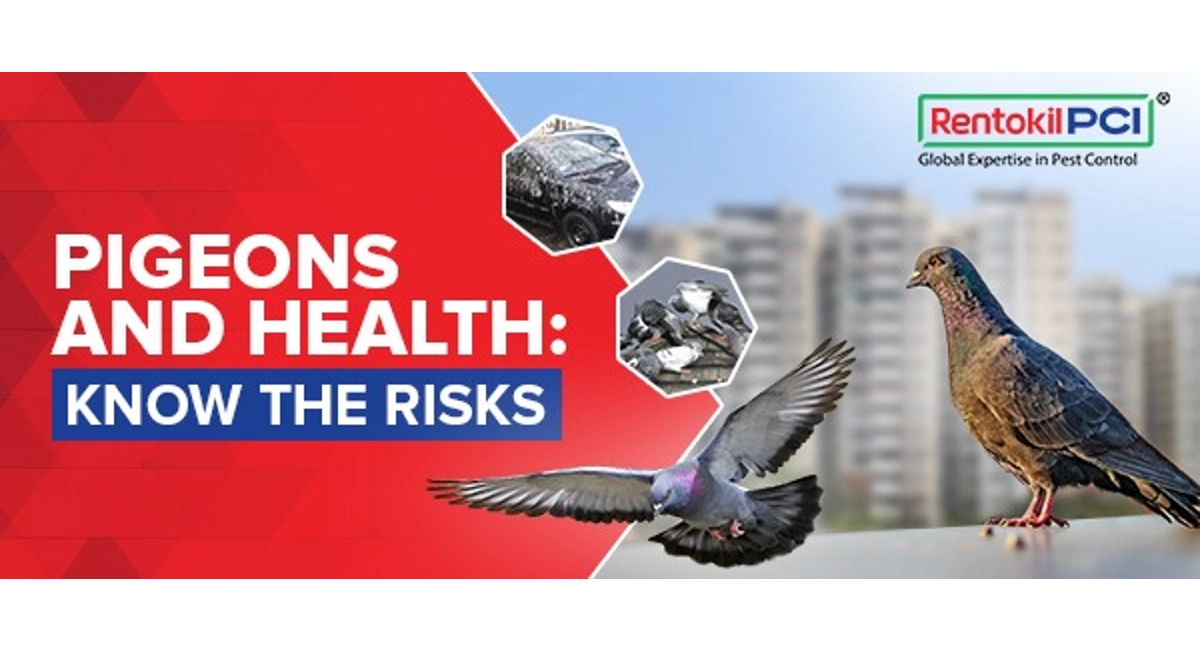
Pigeons are everywhere, and for many of us, they're just another part of our daily lives. We see them perched on buildings, pecking at scraps on the sidewalk, and nesting around balconies, rooftops and other urban spaces. But when pigeons regularly roost or nest around homes and buildings, their droppings, feathers and nesting materials can create hygiene and health concerns.
Pigeons can be associated with several diseases that may affect humans, particularly when people are exposed to contaminated droppings or materials from nesting and roosting areas.
Let's explore the health hazards associated with pigeons, understand some of the diseases associated with them, and look at practical ways to help prevent pigeon-related health risks.
Pigeons can be associated with several diseases and microorganisms that may pose health risks to humans. Here are a few of the health hazards associated with pigeons:
Histoplasmosis is a fungal infection caused by Histoplasma. The fungus can grow in soil or other environmental material containing large amounts of bird or bat droppings. People can develop histoplasmosis after breathing in fungal spores from contaminated environments. Learn more about histoplasmosis from the CDC.
Symptoms can include fever, chills, headache, chest pain, body aches, cough and fatigue. In some cases, particularly among people with weakened immune systems, the infection can become more severe.
Cryptococcosis is a fungal infection caused by Cryptococcus. The fungus can be found in the environment, including soil and bird dung. People can become infected after inhaling fungal spores. Read more about the causes and spread of cryptococcosis from the CDC.
Cryptococcosis usually affects the lungs or brain. Symptoms can vary depending on the part of the body affected and may include cough, fever, shortness of breath, chest pain, headache and other symptoms.
Salmonellosis is a bacterial infection caused by Salmonella. Exposure can occur through contact with contaminated material or surfaces.
Symptoms of Salmonella infection commonly include diarrhoea, fever and stomach cramps. Some people may also experience headache, nausea, vomiting or loss of appetite. See the CDC's guide to Salmonella infection and symptoms.
E. coli refers to a large group of bacteria found in many environments, including the intestines of people and animals. While most types are harmless, some strains can cause illness.
People can become infected with certain types of E. coli through contaminated food or water or through contact with animals, their faeces or contaminated environments. Learn more about E. coli infection from the CDC.
The list does not end here. These are just some of the diseases and health concerns associated with pest birds. There are several other health hazards that pest birds can be associated with.
Yes, pigeon droppings can contribute to health concerns when contaminated material is disturbed or accumulated in areas where people may be exposed. The level of risk depends on factors such as the type and amount of contamination and how the material is disturbed.
For example, the CDC notes that Histoplasma grows especially well in material containing large amounts of bird or bat droppings, while fresh bird droppings on surfaces such as windowsills do not necessarily pose a histoplasmosis risk.
Repeated accumulation of droppings around balconies, rooftops, ledges, air-conditioning units and other building areas can therefore create hygiene concerns. Where large amounts of bird or bat droppings have accumulated, the CDC recommends professional cleanup by companies experienced in hazardous-waste removal.
Preventing pigeons from repeatedly nesting or roosting around your property can help reduce the accumulation of droppings, feathers and nesting material.
Some practical prevention measures include:
Preventing birds from accessing areas where droppings can accumulate is also an important part of reducing exposure. The CDC identifies preventing the accumulation of bird or bat droppings as an important way to reduce Histoplasma exposure.
Given the health hazards associated with pigeons, it's essential to take steps to control their populations and prevent them from roosting in areas where they can pose a risk to human health.
Rentokil PCI's Bird Pro service offers multiple humane solutions for controlling pest birds. Some of these include installing bird-proofing measures, such as netting or spikes, to prevent pigeons from roosting on buildings and other structures. This helps to keep pigeons away from areas where they can pose a risk to human health.
Preventive bird-proofing can also help reduce recurring problems associated with pigeon droppings, nesting materials and roosting activity. The appropriate solution depends on the property, the location of the bird activity and the extent of the problem.
Professional bird control may be useful when:
Pigeons may seem harmless, but persistent activity can create hygiene, maintenance and health concerns. Histoplasmosis, cryptococcosis, salmonellosis and certain types of E. coli infection are among the health concerns that may be associated with exposure to contaminated environments.
Pest bird control services can help address recurring pigeon activity through appropriate bird-proofing and prevention measures.
Persistent pigeon nesting and droppings can create hygiene concerns. Protect your property with professional bird control and prevention solutions.